Insights
Project Hangang: Exploring the Future of Digital Vouchers

In spring 2025, the Bank of Korea launched Project Hangang, a pilot exploring institutional digital currency and deposit-token services. It allowed participants to test digital money in real purchases and examined its potential for payment infrastructure and public-sector vouchers.
Why explore new forms of digital money?
Payments involve banks, card networks, and service providers. Coordination between these systems can introduce fees, settlement delays, and operational complexity.
Government welfare vouchers and policy funds that come with specific usage conditions (when, where, and how they must be spent) are particularly difficult to manage effectively within current systems. During COVID-19, there were cases of fraudulent organizations setting up ghost companies to collect disaster relief funds, and even solar power businesses unaffected by the pandemic receiving support. While the government simplified verification procedures for rapid disbursement, many exploited these vulnerabilities. These incidents highlight the structural limitations of current payment systems, which lack precise control over fund flows and make it difficult to track problems after they occur.
The Bank of Korea aims to address these issues through CBDC with smart contract functionality, working toward a more transparent and efficient payment system.
Project Hangang: deposit tokens in banking apps
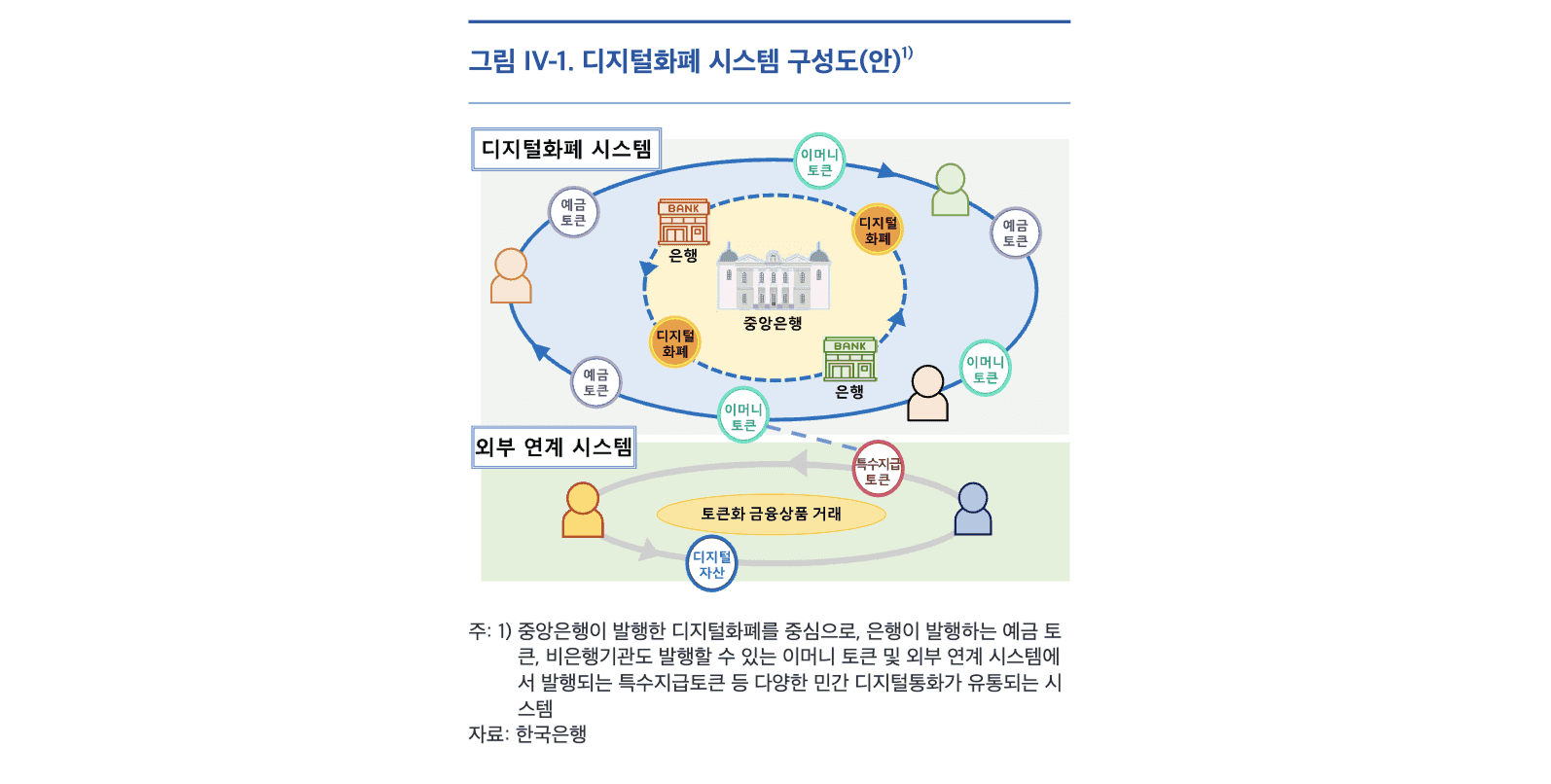
The pilot ran from April to June 2025 with seven banks: KB Kookmin, Shinhan, Woori, Hana, NH NongHyup, IBK, and Busan Bank. Participating users accessed digital wallets through bank apps and converted eligible deposits into deposit tokens.
Source: Bank of Korea
The banks issued deposit tokens within the pilot infrastructure connected to the Bank of Korea’s institutional CBDC. The system used blockchain records and encrypted addresses. During the trial, users could hold up to KRW 1 million in tokens and convert up to KRW 5 million in total.
Payments are made easily via QR codes, usable at participating offline stores (approximately 100 locations, primarily in Busan and Incheon) and over 100,000 online merchants. Sellers benefit from fee-free, real-time settlement, creating advantages for both users and merchants.
More Transparent and Convenient Digital Vouchers
A key component of this project is the "Digital Voucher Program." Vouchers are a way to distribute public budgets for specific purposes and conditions. Instead of complicated paper gift certificates or physical cards that are difficult to manage, the project issues vouchers as digital deposit tokens to solve these problems.
Source: Bank of Korea
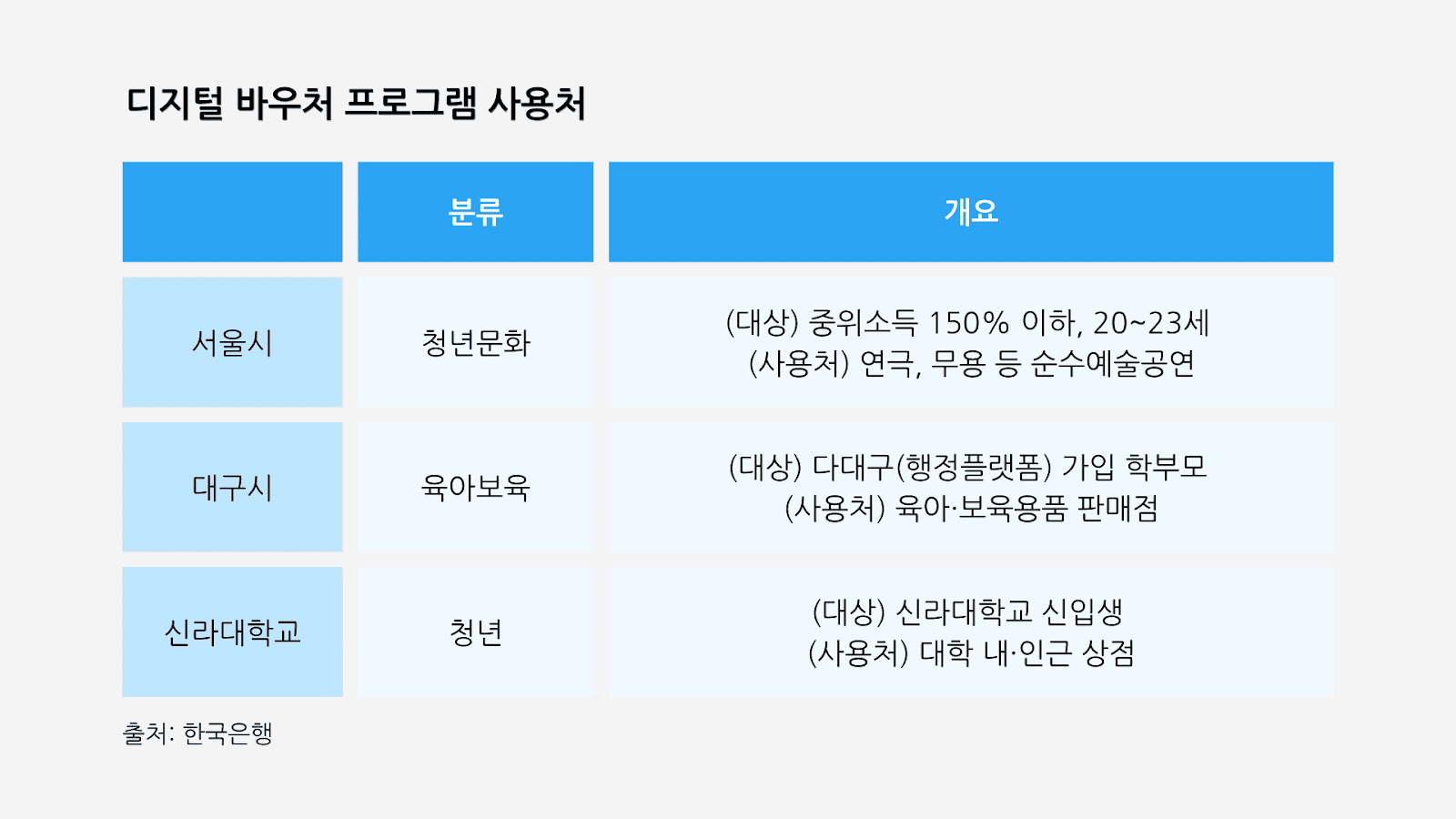
Seoul City, Daegu City, and Silla University in Busan are participating in the experiment, offering youth cultural support, childcare support for multi-child families, and small business support vouchers for university students. According to the Bank of Korea, Seoul City plans to provide vouchers to young people aged 20-23 with household incomes below 150% of the median income, which can be used for attending fine arts performances such as classical music, theater, and dance. These vouchers automatically set usage conditions through smart contracts and provide real-time settlement upon use.
Digital vouchers simplify and increase transparency in transactions between governments, local authorities, users, and merchants, reducing fraudulent claims while improving administrative efficiency and budget execution certainty.
What Role Does SOOHO.IO Play?
The reliability of smart contracts is central to these digital voucher systems. This is where SOOHO.IO serves as a crucial technical partner.
SOOHO.IO provides technology to verify and deploy smart contracts containing voucher rules, including eligible users, timing, locations, and purposes. Reliable execution of those conditions supports settlement and confidence in the overall system.
The company is using the project’s technical insights to research infrastructure for further public-sector applications.
Future Outlook
The CBDC Hangang Project will complete its pilot operations by June 30, 2025, after which the Bank of Korea will comprehensively review user responses, system performance, and areas needing improvement. Based on these results, they will determine how to expand the digital currency system.
The digital voucher program, which has received particular attention in this experiment, could potentially expand to more local governments and various public policies. This trial is expected to demonstrate how condition-based payments and real-time settlement can be practically applied to actual administration.
As a technical partner in this process, SOOHO.IO continues to advance its technology to ensure smart contract-based digital voucher systems can be used more reliably and broadly. The company remains committed to strengthening digital infrastructure foundations and supporting the digital transformation of public policy.
Want to Learn More About SOOHO.IO's Technology?
SOOHO.IO contributes security and smart contract infrastructure to projects such as Hangang, supporting practical development of digital financial services.
If you'd like to know more about SOOHO.IO's technology, please contact us today!
SOOHO.IO Official Channels
Website: https://www.sooho.io/
X (Twitter): https://x.com/soohoio
LinkedIn: https://www.linkedin.com/company/sooho/
Email: contact@sooho.io